
Italy Is Having a Moment—Celebrating Italian Craftsmanship
Porcelain, glass, leather, and cashmere—refined by tradition, built to endure.
Italy is in focus again. As the Winter Olympics arrive in Milan-Cortina, they renew attention on the country. But while the world watches the slopes, we’re drawn to what’s been refined in the valleys, workshops, and kilns below. For us at Kneen & Co, this moment highlights what we’ve always known: Italian craftsmanship creates objects that transform daily life—and over time, become heirlooms.
Consider the way a well-made plate carries light at the rim. How a glass glows instead of glares at dusk. Leather that settles into its form without collapsing. Cashmere that remains composed after seasons of use. These aren’t abstract qualities—they’re what we notice when we set a table, pour wine, or reach for something we use every day. You don’t always know the technique in the moment. You simply recognize the difference.
We curate Italian houses rooted in regions where makers have refined their expertise over generations. We choose them not for nostalgia, but because their work brings intention and beauty into the home. These are objects that serve both art and function—pieces that improve with age and earn their place in your life. This is a closer look at the regional craftsmanship we return to, and why it matters for the spaces we create.
What Defines Italian Craftsmanship
For us, Italian craftsmanship means material intelligence and continuity of technique. The makers we work with understand how porcelain becomes dense under extreme heat, how molten glass must be shaped within seconds, how leather responds to structure and tension, how finishers treat cashmere for durability as well as softness. Moreover, these decisions determine how an object performs over time—in your hands, on your table, in your home.
Across the regions and materials we curate, the principle remains consistent: construction precedes decoration. From the start, use is considered. That’s why we choose to work with them.
Tuscany (Doccia): Porcelain and the Discipline of Fire
Artisans have produced porcelain in Doccia since the 18th century, and we’ve worked directly with Ginori 1735 to bring that tradition into contemporary homes. Hard porcelain requires high-temperature firing to achieve full hardening—a process that strengthens the body and reduces how much liquid it absorbs. Consequently, that density influences durability, how light passes through, and resistance to staining over time. This matters when you’re choosing pieces meant to be passed down.
Ginori has made porcelain in Doccia since 1735. The continuity of that process allows decorative expression to rest on a solid foundation. Whether you choose their classical forms or richly patterned pieces, the work relies on porcelain built to become an heirloom. We notice the difference through repetition. Edges retain definition. Surfaces maintain clarity. Form holds. These pieces age with you, not against you.
In Tuscany, the kiln determines the outcome. We curate what emerges.
Murano: Glass Governed by Timing
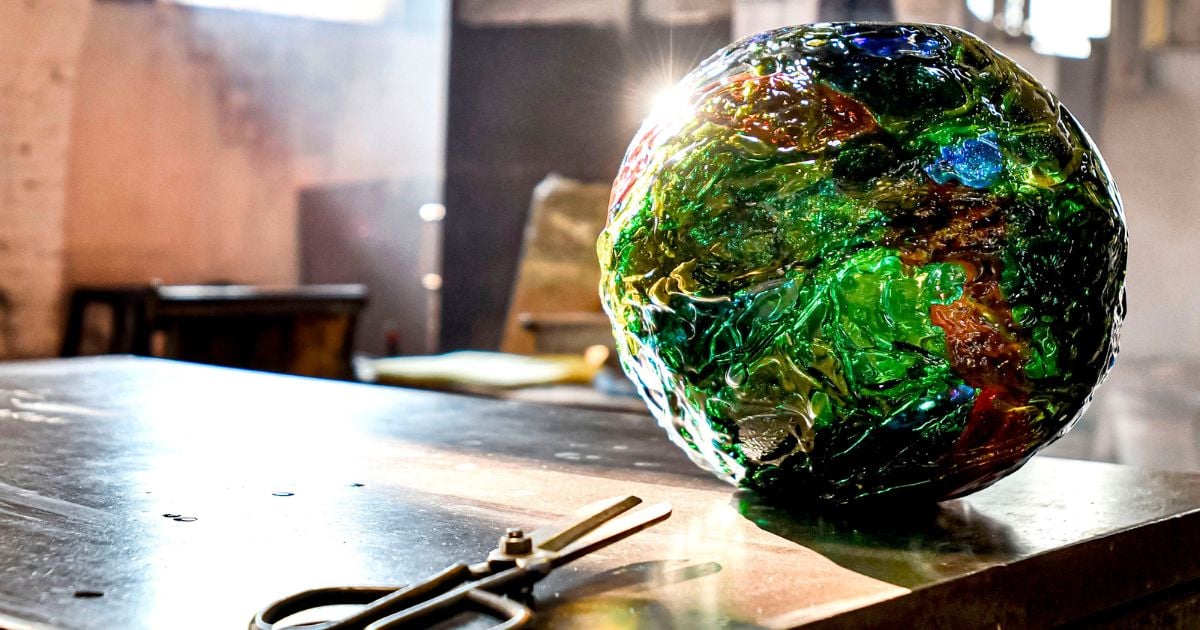
Murano’s glassmaking tradition depends on heat and coordination. Once molten glass begins to cool, artisans cannot alter it. Therefore, timing becomes structural—and the result becomes something you want to hold. We work with Venini, a house that has advanced Murano artistry through techniques such as filigrana, murrine, and incalmo—methods that require precision in embedding, layering, and joining glass while it remains workable. Additionally, controlled cooling prevents internal stress, which preserves strength after the glass hardens.
In lighting and objects alike, thickness and makeup influence how light spreads, focuses, or glows. This is what we mean when we talk about objects that serve both art and function. Similarly, we’ve brought in R+D.LAB for their interpretation of Italian glassmaking through contemporary proportion and restrained color. Giberto, too, for their emphasis on clarity, balance, and comfortable design. Across approaches, understanding the material governs the result—and we look for that understanding in everything we curate.
Glass reveals its quality gradually—through weight, how it catches light, and stability in use. These are the details that matter when you live with something every day.
Genoa and Milan: Leather as Structure
In Genoa and Milan, leather craftsmanship follows a structural approach. Construction determines whether a piece maintains its shape over time—whether it’s a desk set that becomes part of your daily ritual or a decorative object that anchors a room for decades. We work with Giobagnara, a house informed by family tradition dating back to 1939. They focus on careful construction and material selection. Artisans finish edges precisely; they tension surfaces to hold form; structure supports lasting use. This level of intention shows up in how their pieces sit in a space—and how they endure.
Meanwhile, we’ve curated Rabitti 1969 for their work with saddle leather—vegetable-tanned and built to develop patina through use. Change becomes expected and planned for. The leather improves as you handle it, deepening in character, making it more yours over time. These are pieces that tell a story. In Milan, Riviere combines leather alongside lacquer, wood, and metal in measured proportion. Material junctions align cleanly; detailing stays exact. We choose them because they understand that leather isn’t just covering—it’s framework.
These houses create objects that bring weight and presence into a room. Objects that become heirlooms not because they’re delicate, but because they’re irreplaceable.
The Alps: Cashmere and Finishing Discipline
In the Italian Alps, craftsmanship takes a quieter form—but one we pay close attention to. Makers founded Masserano in 1942, refining their approach to cashmere production through decades of experience. We work with them because they understand that beyond fiber selection, finishing processes influence resilience, drape, and long-term softness. As a result, the softness that endures comes from process, not chance. This is what separates something you’ll reach for season after season from something that pills and loses its shape.
When we talk about bringing intention into the home, this is what we mean: materials chosen and finished with care, so they remain beautiful through use.
Why This Still Matters
Regional craft preserves the connection between place and practice—and that’s what we look for when we curate. When artisans still fire porcelain in Doccia, shape glass through Murano technique, build leather goods in Genoa and Milan, and refine cashmere in the Alps, their expertise remains grounded in material rather than trend. They know what they’re making because they’ve been making it, learning from it, refining it for generations.
Italy may be in focus right now. However, the traditions behind the houses we work with have been refining their standards long before this moment—and they’ll continue long after. At Kneen & Co, this is what we return to: objects that bring beauty and intention into everyday life. Objects shaped by craft, designed with care, and built to become heirlooms.
Because the table you set, the glass you pour from, the objects you reach for—they matter. Not in spite of being everyday, but because they are. And the best ones don’t just last. They become part of your story.
Frequently Asked Questions About Italian Craftsmanship
What makes Italian craftsmanship distinctive?
We see Italian craftsmanship defined by regional focus and continuous technique. Makers have refined certain materials—porcelain in Doccia, glass in Murano, leather in Genoa and Milan, cashmere in the Alps—over generations. Therefore, the difference lies in built-up material knowledge and careful construction. When we curate, we look for houses that embody this depth.
Why is hard porcelain valued for longevity?
Artisans fire hard porcelain at higher temperatures to achieve full hardening, which strengthens the body and reduces how much liquid it absorbs. Consequently, this improves durability, clarity, and resistance to staining over time. For pieces meant to be used daily—and passed down—this matters.
What distinguishes Murano glassmaking?
Murano glass relies on centuries-old techniques such as filigrana, murrine, and incalmo, all performed while the material stays molten. Precision timing and controlled cooling ensure strength and depth of light. We work with Murano houses because they’ve mastered these techniques—and because the results transform how light moves through a space.
Why does vegetable-tanned leather develop patina?
Tanneries use natural tannins in vegetable tanning, which allows leather to mature gradually. As a result, exposure to light and handling deepen tone and character rather than breaking down the surface. We choose vegetable-tanned leather because it improves with use—it becomes more yours over time, eventually becoming an heirloom.
How does finishing influence cashmere durability?
Finishing techniques—including washing and brushing—affect how cashmere maintains softness, strength, and drape across seasons of use. We look for houses that understand this, because it’s the difference between cashmere that lasts and cashmere that doesn’t.
Are these objects intended for everyday use?
Yes. We curate based on the belief that beauty and function go together. These objects are built for repeated use and designed to hold up over time—because the most meaningful things in a home are the ones you actually live with, and eventually, pass down.